Races
Huesca Night Race: routes, schedules, and prices
The Huesca event returns with two distances, a start at dusk, and a popular atmosphere that fills the center with energy.

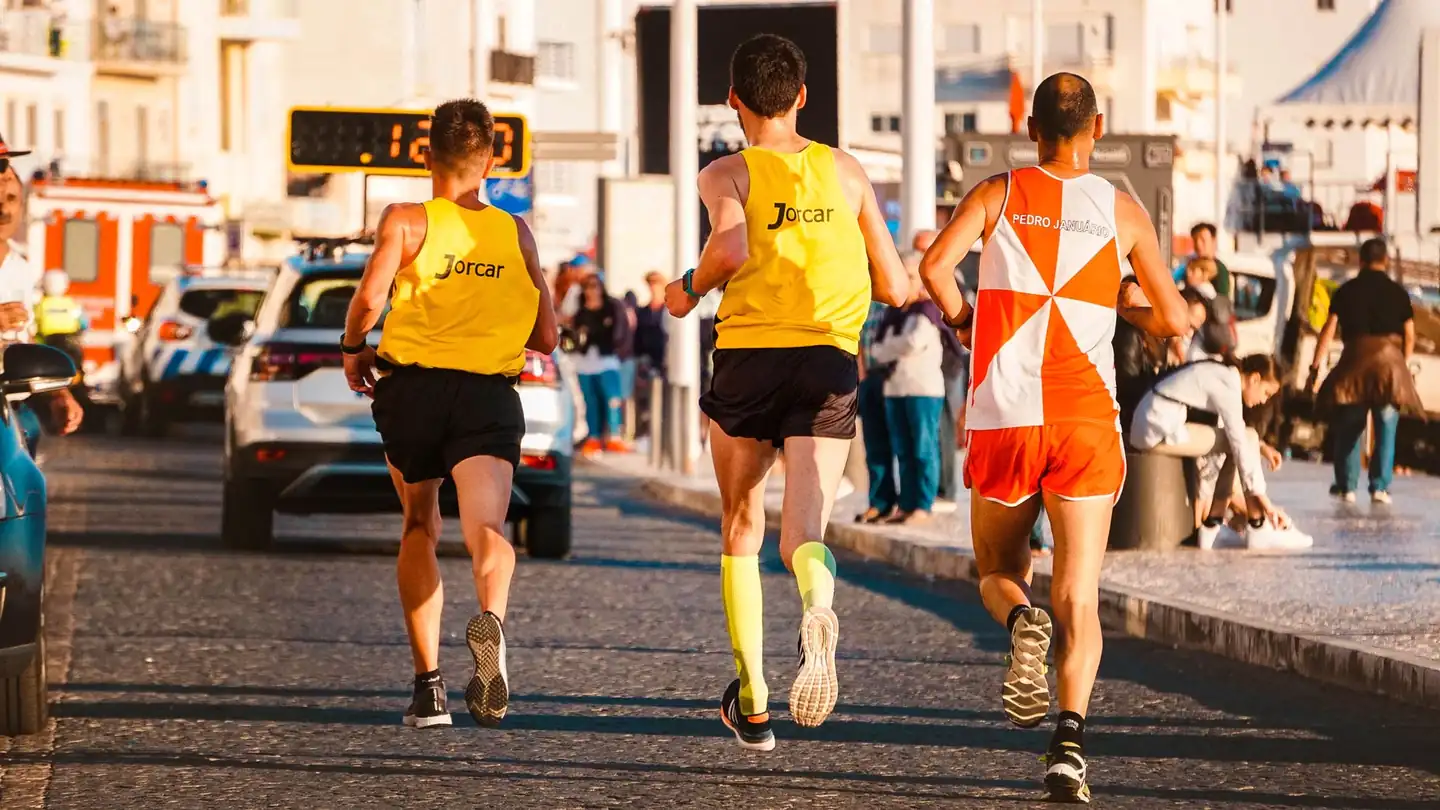
Huesca lights up again to the rhythm of the runners with an event that blends popular sport, a university atmosphere, and central streets turned, for one night, into a small urban circuit. The race has established itself as one of the most distinctive events on the Aragonese calendar for its sunset format, its accessible nature, and an organization that links it to the promotion of healthy lifestyle habits.
Huesca’s night race has ranged between 4.84 and 7.79 kilometers in its recent editions, with a start around 9:20 p.m. and a finish near the Municipal Sports Palace. This format places it halfway between a sporting celebration and a popular competition, with distances designed for different profiles and an urban route that lets you run without the harshness of a mountain profile or the demands of a major long-distance event.
An urban race that turns the night into a sporting stage
The first image left by this race is that of a city that changes its skin when evening falls. Huesca’s city center takes center stage, the streetlights take over from natural light, and the runner moves through familiar streets with a different perception, slower and at the same time more intense. It is not just a run: it is a way of seeing the city from another atmosphere, with the urban core as a backdrop and the group as the driving force.
In the most recent references, the organizers have presented it as an initiative with a clear public-health vocation. The event was born and has grown with a very specific message: to encourage regular physical activity and raise awareness about the prevention of hypertension and other metabolic diseases. That focus gives it value beyond the bib number, because it links sporting participation with an idea of collective well-being that has taken root in the university and local spheres.
Its social dimension also carries weight. The race has incorporated collaborations with health organizations and contributions to charitable causes, as well as measures related to sustainability. In a calendar where many races resemble one another, details like these help explain why this event has developed its own identity: it does not depend solely on the clock, but on a shared story between the university, the city, and popular runners.
The distances define two ways of experiencing the same course
The sporting offering has centered on two very clear routes. The shorter one, at 4.84 kilometers, is usually aimed at accompanied minors and those looking for a shorter experience, while the longer one, at 7.79 kilometers, is designed for adults and for those who prefer a somewhat more sustained effort without entering the logic of a long race. In both cases, the circuit maintains an accessible profile and a very fast-running character.
That design has practical consequences. For most participants, the race feels like a moderately intense effort, on asphalt and on flat or practically flat ground. This favors steady paces and makes the course comfortable for those who are not chasing a time, but rather a well-organized sporting night. The absence of marked elevation changes also reduces muscle fatigue and allows participants to enjoy the atmosphere more, something that in a night race matters almost as much as the classification itself.
The edition publicized by the Huesca Campus of the University of Zaragoza added another relevant nuance: participation can be individual or team-based, with university and school categories. This combination broadens the race’s reach and reinforces its collective tone. It is not just about adding runners at the start, but about creating a network of participation that connects classrooms, schools, and popular sports fans on the same night.
Start, times, and bib collection, the most important details
In the latest published references, the start was set at around 9:20 p.m. from the Huesca Municipal Sports Palace, a point that concentrates the pre-race movement, credential collection, and the usual pre-start nerves. Bib collection was scheduled for the same day, in the accreditation area in the north zone of the pavilion, from 6:30 p.m. until 30 minutes before the start. That window requires some precision in planning the afternoon to avoid unnecessary rush.
The price is also one of the elements that explain its success. In the most recent reference information, registration was set at 8 euros for the adult category and 5 euros for middle and younger categories. These are modest figures for an urban race with official organization and several modalities, and they fit the logic of an event designed to be mass-participation rather than elite. Affordable pricing has, in fact, been one of the keys to its success.
The calendar has varied depending on the edition, but the pattern of the second Friday in May has appeared repeatedly in the Huesca Campus information. There has also been talk of expanded quotas, with up to 725 places in one of the calls in an attempt to break the participation record. That combination of a fixed date, moderate pricing, and a popular format explains why the race spreads so easily by word of mouth locally.
A nighttime atmosphere that changes the way you compete
Running at night changes the experience in a very noticeable way. The temperature is usually more pleasant, artificial light cuts the silhouettes, and the sound of the crowd takes on a different, almost sharper presence. Perception of effort changes: the runner focuses more on immediate references, the sheen of the asphalt, breathing, and the line of lights that mark the route. Everything becomes more cinematic, but also more intimate.
In a city like Huesca, that atmosphere has special significance. The historic center, the shopping streets, and the urban access routes provide a recognizable setting that turns the race into a kind of accelerated stroll through the most frequented places of the Upper Aragonese capital. Participation is not limited to adding kilometers; it intersects with a living city, with spectators, open balconies, and a sense of shared event that is rarely found in more impersonal races.
That festive component does not eliminate the challenge, but places it on another level. Most participants do not arrive with the tension of a major competition, but with the intention of completing the course and experiencing the night lightly. The background music is the sound of footsteps and applause, a simple mix that is enough to turn a May evening into an experience remembered for months.
What the urban route brings to the popular runner
Urban circuits have a virtue that is often overlooked: they allow you to measure the pulse of a city while running. In this event, the route has passed through areas such as Coso Alto and Coso Bajo in some editions, as well as the surroundings of Miguel Servet Park and monumental areas of the center. That variety of settings adds visual interest and helps maintain focus on a short course.
For the popular runner, an itinerary like this offers clear advantages. The visual references are constant, the terrain is predictable, and the logistics are simpler than in a mountain race or an event with multiple pace changes. Asphalt favors a stable stride and makes it easier for each participant to adapt their pace to their level. That technical simplicity is part of its appeal: you do not need to be an expert to feel part of the event.
The stability of the course also explains why the race has attracted groups of friends, university teams, and participants seeking a first competitive experience. A night race of this kind can serve as an entry point into the popular race calendar. It is short, visible, and manageable, three qualities that rarely come together so naturally.
The weight of the University of Zaragoza in the race’s identity
The link with the Huesca Campus of the University of Zaragoza is not a minor detail, but the axis that shapes the event’s identity. The university organization has turned the race into an activity that goes beyond sport and places it in the realm of outreach about health, coexistence, and participation. That perspective explains why the event attracts both students and runners from outside the academic sphere.
The presence of university and school categories reinforces that connection. So does the collective focus, with mixed and women’s teams in some editions, as well as specific awards for different modalities. The race is not looking for just one winner, but rather a broad snapshot of participation, with room for very different ages, schools, and paces. That plurality gives it depth and sets it apart from more linear events.
The initiative has also been associated with health prevention messages, something especially fitting in an event that speaks of healthy habits through the very act of running. At a time when sedentary lifestyles and stress are part of everyday life, an urban race of this type works almost like a public demonstration of how simple it can be to move more and compete less against others than against laziness.
Registration, slots, and demand in the latest editions
The opening of registration has been one of the most closely followed moments of each call. In the information for a recent edition, it was indicated that the general registration period remained open until May 5 at midnight, with an expansion of slots to 725 in an attempt to meet demand. That figure is revealing, because it shows a race with strong local appeal and real drawing power in a medium-sized city.
The registration process, in the sources consulted, has been channeled through the event’s official website or through platforms linked to the organizer. For university and school categories, prior contact with the corresponding academic center has also been requested. Management by category responds to the logic of a race that aspires not only to be popular, but also organized and recognizable for the different groups involved.
Low prices also help sustain that demand. When a race offers accessible distances, an attractive time slot, and an entry fee below the usual average in urban events, the result is usually a mix of loyalty and curiosity. Huesca has known how to play that card: one night, two distances, and an entire city as the backdrop.
What makes this event different within the Aragonese calendar
Aragon has a broad calendar of popular races, but not all of them rely on such a clear narrative. In Huesca, the distinctive value lies in the combination of nighttime schedule, central route, and university stamp. That combination creates a race with its own personality, easy to understand even for those who do not closely follow the regional circuit.
Its balance between simplicity and uniqueness also helps. It does not require complex preparation, does not demand long travel within the city, and does not present a complicated technical profile. Yet the night light, the urban route, and the festive character make it a memorable event. That contrast is one of its greatest virtues: it seems like a simple race, but it leaves a very strong impression.
The city, moreover, provides it with an ideal setting. Huesca does not need great artifices to function as a sporting stage; its human scale, recognizable streets, and historic center are enough to build a close experience. The race relies on that compact geography, where spectators never lose sight of the event’s pulse and the runner feels they are moving within a single continuous scene.
Huesca at night as a sporting and urban landscape
Night races have something ritualistic about them. The city lowers the volume, the light becomes partial, and the body suddenly seems to listen more. In Huesca, that sensation finds an especially favorable setting because the race is not hidden in the outskirts or diluted in an industrial environment, but unfolds right in the urban fabric. The landscape is the city itself, without the need for added scenery.
That detail also matters from a journalistic point of view. A race like this is not understood solely by its kilometers or prices, but by the way it activates a shared space. The runner passes by, the neighborhood watches, the campus organizes, and the city agrees to be crossed at another speed. It is a simple operation, almost domestic, but with an effectiveness that is hard to imitate.
That is why the race continues to generate interest year after year. Not because of the promise of exaggerated epicness, but because of something more solid: a clear, measurable, and recognizable proposal, capable of bringing together sport, health, and urban life in an unusual time slot. Huesca’s night race works because it does not try to be anything else; it is what it promises, and that is precisely where its strength lies.


Marathon finish times: pacing, splits and how to calculate them

Carrera por la Solidaridad brings 2,546 together in València

Two group runs in Cádiz after half marathon cancellation

Merillas and Alonso win Dements and claim world series titles

ASICS Magic Speed 4: review, carbon plate and best uses

Saitoti and Baumová win the Gran Carrera del Mediterráneo 2026

Long running tights: how to choose them for men and women

Njuguna and Kangogo win in Málaga; Mateo second in half marathon

Behobia-San Sebastián 2026: Javi Guerra and Katherine Tisalema win in the heat

The marathon slump: causes and how to avoid it

 Races3 months ago
Valencia Half Marathon 2026: date and registration

 Reviews and Comparisons4 months ago
Asics Gel-Roadmiles 3 for men: review and current price

 Races3 months ago
Valencia Marathon 2026: entry, ballot and course

 Reviews and Comparisons4 months ago
Asics Gel Sonoma 8 Gore-Tex: complete analysis for trail and rain

 Sneakers3 months ago
Saucony Endorphin Pro 4: full review and verdict

 News5 months ago
Strava API 2026: what changes for clubs, challenges and runner apps?

 Reviews and Comparisons5 months ago
Nike Alphafly 3: opinions, sensations, and real key points

 Reviews and Comparisons4 months ago
Under Armour running shoes review 2025-2026: models and key features

 Sports Equipment4 months ago
Shoe sizes in cm: a clear guide to getting the right fit for your footwear

 Sneakers3 months ago
Adidas Adizero Boston 13 for men: review and verdict

 Sneakers3 months ago
Skechers GO RUN Consistent 2.0 analysis: comfort and limits

 News5 months ago
Valencia Marathon 2026 route: key tips to train and run better